
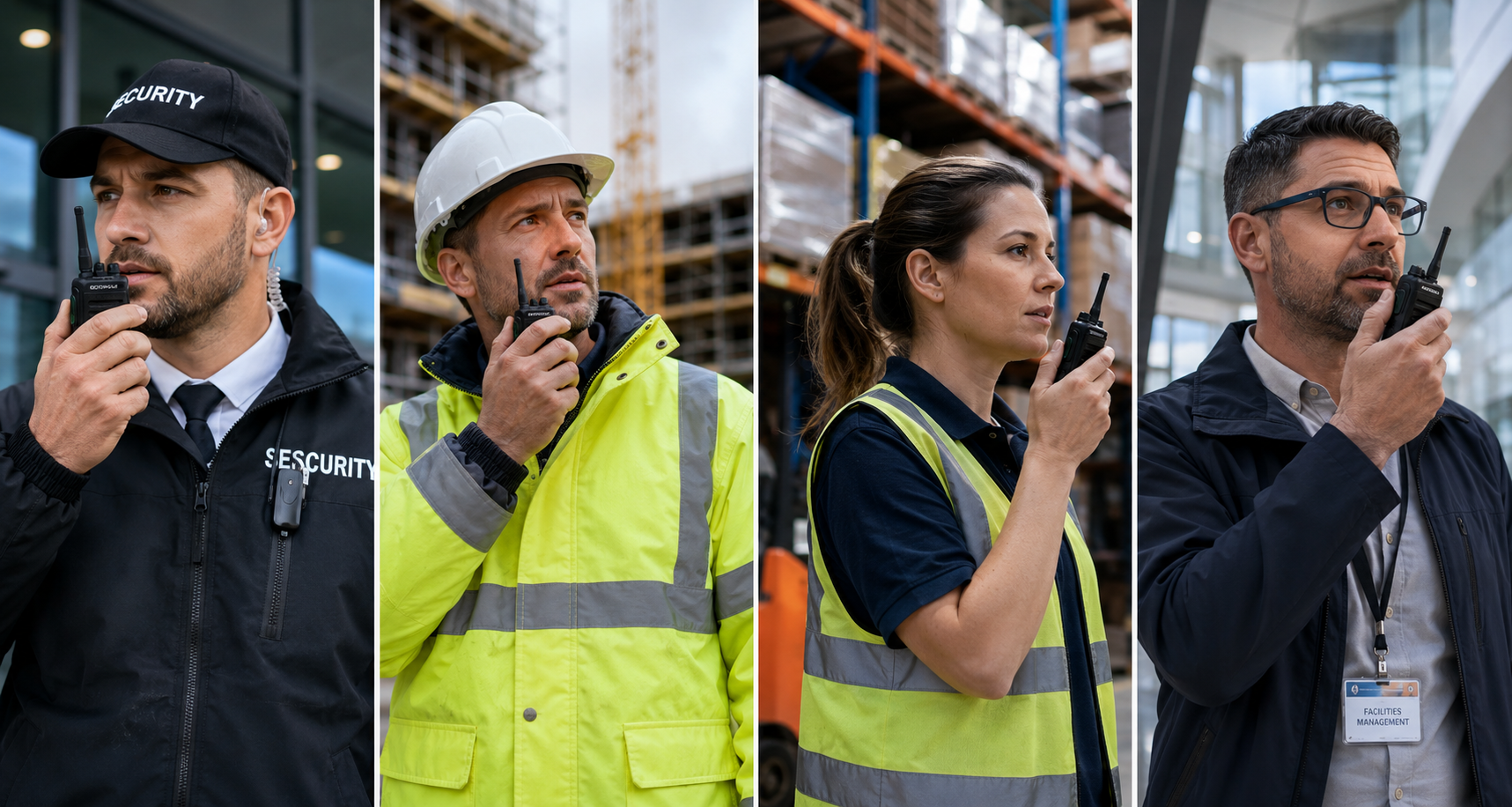
Key Features of Modern Two-Way Radios
Whether you are purchasing, hiring or upgrading a two-way radio system, understanding the features available on modern radios can help you choose the right solution for your organisation.
Today's digital radios offer far more than simple voice communication. Many include advanced safety functions, productivity tools and privacy features that improve operational efficiency while helping to protect staff working in challenging environments.
Here are some of the most valuable features commonly found on modern two-way radios.
Safety Features
Emergency Alert
In an emergency, speed is critical.
Many radios include an Emergency Alert function that allows the user to instantly call for assistance by pressing a dedicated emergency button. This immediately sends an alert to supervisors, control rooms or other radio users, helping to ensure a rapid response.
Lone Worker Protection
The Lone Worker feature is designed for employees who regularly work by themselves.
The radio requires the user to acknowledge periodic safety checks. If the operator fails to respond within a specified time, an automatic alert is generated, allowing colleagues or managers to investigate.
Man Down Technology
Man Down functionality provides an additional level of protection for workers operating in hazardous environments.
Using built-in sensors, the radio can detect unusual angles, impacts or prolonged inactivity. If the user is unable to respond to warning prompts, the radio automatically transmits an emergency alert with the user's identification details.
This feature is particularly valuable for construction workers, engineers, maintenance teams and security personnel.
Intrinsically Safe Radios
Certain industries require specialist equipment that can be safely used in potentially explosive environments.
Intrinsically safe radios are designed and certified to prevent sparks or heat from igniting flammable gases, vapours or dust, making them ideal for sectors such as oil and gas, chemical processing and utilities.
Out-of-Range Alerts
Many digital radio systems can monitor network connectivity and notify users when they move beyond communication coverage.
When coverage is restored, the radio automatically alerts the user, helping to maintain reliable communication at all times.
Productivity and Communication Features
Dual Analogue and Digital Operation
Many modern radios support both analogue and digital communication modes.
This allows organisations to upgrade their systems gradually while maintaining compatibility with existing equipment, providing flexibility and protecting previous investments.
Text Messaging
Digital radios often support text messaging, making it easy to send information that may be difficult to communicate verbally.
This can be particularly useful for:
- Addresses
- Job references
- Serial numbers
- Access codes
- Contact information
Audio Message Recording
Some radios allow users to record and store voice messages for later playback.
This feature can be useful when important instructions are received while the user is occupied or unable to respond immediately.
Caller Identification
When a user transmits, their unique radio identification can be displayed on compatible radios and dispatch systems.
This enables supervisors and control rooms to instantly identify who is communicating, improving accountability and operational awareness.
Hands-Free Operation
Many radios support headsets and Voice Activated Transmission (VOX).
This allows users to communicate while carrying out other tasks without needing to press the push-to-talk button, making hands-free communication ideal for logistics, manufacturing and warehouse environments.
Displays and Keypads
Radios equipped with LCD screens and keypads provide access to advanced features including:
- Contact lists
- Text messaging
- Menu navigation
- Channel management
- Status updates
These capabilities make modern radios significantly more versatile than traditional analogue models.
Environmental Protection
IP Ratings
The working environment plays a major role in determining the most suitable radio.
Two-way radios are assigned an IP (Ingress Protection) rating that indicates their resistance to dust, dirt and water.
A higher IP rating provides greater protection, making the radio more suitable for demanding outdoor or industrial environments.
Privacy and Security Features
Digital Encryption
Digital encryption prevents unauthorised users from listening to conversations.
For organisations handling sensitive information, encryption provides the highest level of communication security available on two-way radio systems.
Voice Inversion Scrambling
Some analogue radios include voice inversion technology, which scrambles voice transmissions to make conversations more difficult to intercept.
While not as secure as digital encryption, it provides an additional level of privacy for analogue radio users.
Choosing the Right Radio Features
The ideal radio system depends on your operating environment, communication requirements and safety obligations.
Whether you need lone worker protection, digital encryption, intrinsically safe certification or advanced messaging capabilities, DCS 2 Way Radio can help you identify the most suitable equipment for your organisation.
Call our experienced team on 0800 294 7766 for expert advice on selecting the right two-way radio system for your business.