
Why Reliable Communication Matters During an Emergency
When an emergency occurs, the ability to communicate quickly and reliably can make all the difference. Whether coordinating a mountain rescue, managing a flooding incident or supporting emergency services during a major event, dependable communications are essential for protecting lives and ensuring an effective response.
For decades, two-way radios have been trusted by emergency services, search and rescue teams, local authorities and volunteer organisations because they provide instant communication, excellent reliability and the ability to operate independently of public mobile phone networks.
At DCS 2 Way Radio, we help organisations implement communication systems that continue to perform when they are needed most.
Common Emergency Situations Where Two-Way Radios Excel
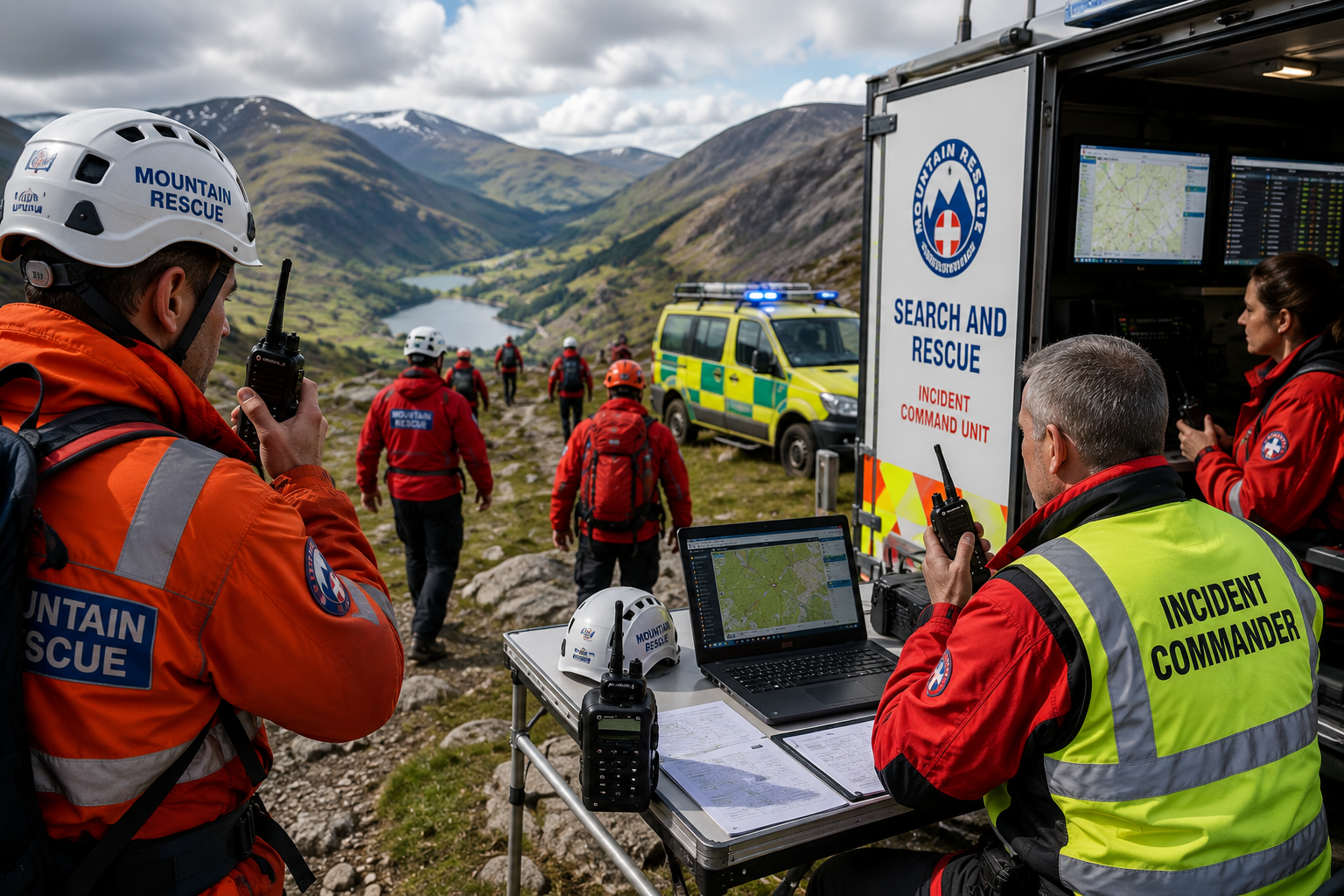
Mountain Rescue and Outdoor Safety
The UK's hills, mountains and remote countryside attract millions of walkers every year. While most outings are completed safely, rapidly changing weather conditions, injuries and navigation errors can quickly create emergency situations.
In remote areas, mobile phone coverage can be unreliable or unavailable altogether. Two-way radios provide a dependable communication link between rescue teams, event organisers and support staff, helping coordinate responses when every minute counts.
We have previously assisted organisations operating in challenging upland environments, helping them establish effective radio communications across difficult terrain.
Coastal and Marine Emergency Communications
Britain's coastline presents unique communication challenges. Lifeboat crews, harbour authorities, marine operators and coastal rescue teams rely heavily on radio communications because of their reliability and range.
VHF radio systems are widely used throughout the maritime sector and remain the preferred communication method for many marine safety organisations. Unlike mobile phones, radio systems are specifically designed to provide dependable communications in coastal and offshore environments.
For organisations operating near water, a properly designed radio system can provide a vital safety lifeline.
Flooding and Civil Emergencies
Flooding has become one of the UK's most common large-scale emergency scenarios. During severe weather events, communication networks can become overloaded or damaged, making coordination increasingly difficult.
Emergency planners, local authorities, volunteer groups and response teams frequently rely on radio communications to maintain contact when conventional infrastructure is under pressure.
Two-way radios allow multiple teams to communicate instantly, share critical information and coordinate resources without relying on public networks.
Major Incident and Disaster Response
From severe weather events to infrastructure failures and large public incidents, effective communication is central to any emergency response plan.
Digital two-way radio systems enable:
- Instant communication between response teams
- Group broadcasts to multiple users simultaneously
- Emergency alert functions
- Priority communication channels
- Reliable operation independent of mobile phone networks
- Location and safety monitoring features
These capabilities make two-way radios an essential component of many emergency preparedness strategies.
Why Mobile Phones Are Not Always Suitable for Emergencies
Mobile phones are invaluable everyday communication tools, but they do have limitations during emergency situations.
Network Congestion
During major incidents, thousands of people may attempt to use mobile networks simultaneously. This can lead to congestion, delays and failed calls precisely when communication is most important.
Coverage Limitations
Remote rural areas, mountainous regions and coastal locations often have patchy mobile coverage. Even where coverage exists, signal quality can vary dramatically.
Slower Communication
A mobile phone requires users to dial a number, wait for the recipient to answer and then relay the message. Two-way radios provide instant push-to-talk communication, allowing information to be delivered immediately.
Limited Group Communication
Sharing urgent information with multiple people via mobile phones can be time-consuming. A radio user can communicate with an entire team at the press of a button.
What About Satellite Phones?
Satellite communications can be extremely useful in very remote environments where no other infrastructure exists.
However, satellite systems are generally:
- More expensive than radio systems
- Dependent on subscription services
- Vulnerable to signal obstruction from buildings, trees and terrain
- Affected by atmospheric conditions
For many organisations, a professionally designed two-way radio system provides a more practical and cost-effective solution.
Advanced Safety Features Available on Modern Radios
Today's digital radios offer far more than simple voice communication.
Popular emergency features include:
- Emergency alert buttons
- Lone worker monitoring
- Man down protection
- GPS location tracking
- Group calling
- Encrypted communications
- Remote monitoring and dispatching
These capabilities allow organisations to enhance both operational efficiency and employee safety.
Preparing Your Organisation for the Unexpected
No organisation can predict when an emergency will occur, but every organisation can prepare for one.
Whether you require communications for a mountain rescue team, local authority, healthcare organisation, event management company or emergency response operation, choosing the right radio system can significantly improve coordination, safety and resilience.
At DCS 2 Way Radio, we have extensive experience designing and supporting radio systems for demanding environments where reliability is critical.
Contact our team today on 0800 294 7766 to discuss your emergency communication requirements and arrange a free consultation.